
By Cons of War Editorial | March 23, 2026 | 10 min read
At 7 a.m. on Monday morning, U.S. President Donald Trump said there had been “productive conversations” with Iran and announced a temporary pause on planned strikes targeting parts of Iran’s energy infrastructure.
Within hours, Iran’s Foreign Ministry rejected the claim.
There had been no talks. No negotiations. No diplomatic engagement of any kind, Iranian officials said.
Two governments. Two completely different accounts — issued on the same day.
And in the space between those narratives, the war continues.
What Can Be Verified
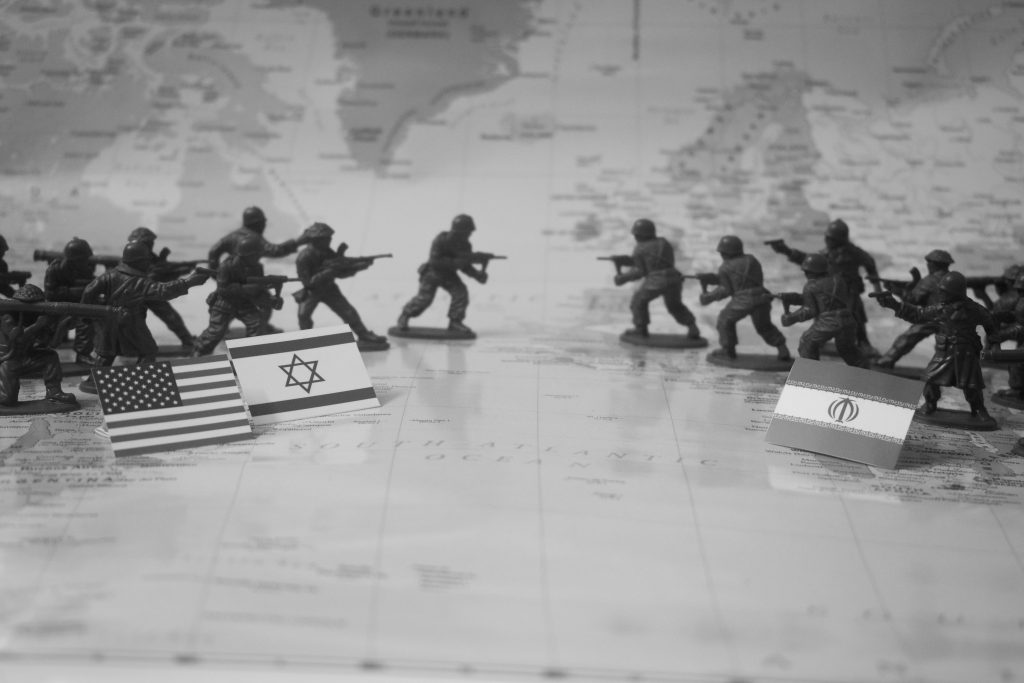
” USA AND Israel vs Iran” Photo by Levi Meir Clancy on Unsplash
The conflict involving Iran, Israel, and the United States has intensified over recent weeks, with repeated exchanges of missiles, drones, and airstrikes reported by multiple international outlets including Al Jazeera and CNN.
Iranian projectiles have been reported targeting Israeli territory and U.S. positions in the region
Israeli and U.S. strikes have hit sites inside Iran described as military or strategic
Regional spillover has affected parts of Lebanon and Iraq
Precise figures on strikes and casualties remain difficult to independently verify in real time. However, multiple monitoring groups and humanitarian organisations report that hundreds of civilians have been killed across affected areas, including women and children.
These are not abstract numbers. Many were killed in residential areas.
Escalation and Strategic Targets
In recent days, attention has focused on strikes involving sensitive infrastructure.
Reports indicate impacts near Dimona — an area associated with Israel’s nuclear facilities — as well as activity around Iranian nuclear-related sites such as Natanz.
The International Atomic Energy Agency has urged restraint, warning that military activity around nuclear infrastructure carries the risk of serious radiological consequences.
This marks a shift in the nature of the conflict.
When critical infrastructure — especially nuclear-linked sites — becomes part of active targeting, the margin for error narrows significantly.
“When nuclear sites become targets, the margin for catastrophic error narrows to almost nothing.”
The Civilian Reality
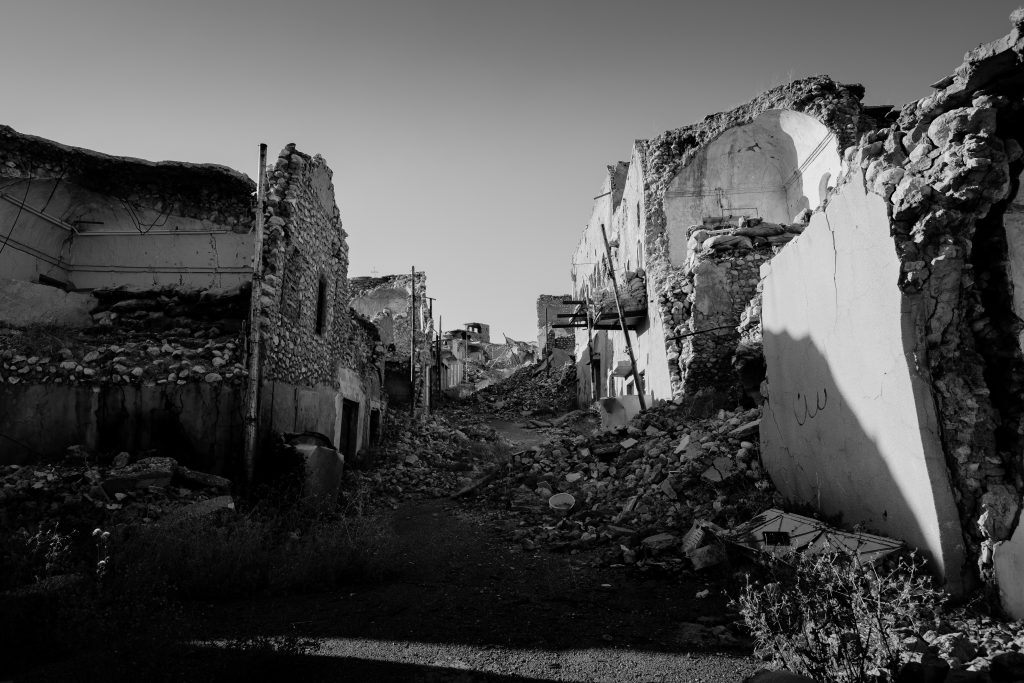
While governments exchange statements, civilians continue to bear the consequences.
Residents in Tehran and across the wider region describe disruptions to daily life — intermittent power, air raid alerts, and uncertainty around access to basic services.
Humanitarian concerns extend beyond immediate casualties:
Damage to energy infrastructure affects water supply systems
Hospitals become harder to operate without stable electricity
Supply chains for food and medicine are disrupted
In conflicts like this, indirect effects often outlast the strikes themselves.
As one resident told Al Jazeera, the fear is not only of explosions — but of what happens afterward if essential systems fail.
“The explosions are terrifying. But it is what comes after — the water that stops, the hospitals that go dark — that kills the most people.”
A Conflict That Is Spreading
The impact is no longer confined to one country.
Incidents linked to the conflict have been reported across multiple states in the region, underscoring how quickly modern warfare crosses borders — intentionally or otherwise.
This reflects a broader pattern: contemporary conflicts are rarely contained. Economic, environmental, and human consequences ripple outward — often far beyond the original battlefield.
“Modern wars do not stay inside their borders. They travel — through supply chains, through energy markets, through the bodies of people in countries nobody is reporting on.”
The Strait of Hormuz and Global Risk
One of the most significant pressure points remains the Strait of Hormuz — a narrow passage through which a substantial portion of the world’s oil supply moves.
Any disruption to traffic in the strait has immediate global implications.
According to the International Energy Agency, sustained instability in this corridor could trigger serious shocks to global energy markets. The International Maritime Organisation has warned of mounting risks to commercial shipping as security concerns affect vessel movement and insurance costs.
Oil prices have already shown significant volatility in response to developments — reflecting how closely financial markets are tracking every statement, every missile, every pause announcement.
“The world’s most important waterway is 33 kilometres wide. Right now it is holding the global economy hostage.”
What a “Pause” Means — and What It Does Not
The announced five-day pause in certain U.S. strike plans, if implemented, would represent a limited and temporary measure.
It does not amount to a ceasefire.
Military operations across the region have not fully stopped
No confirmed diplomatic framework has been publicly established
Iran has explicitly denied that negotiations are underway
In practical terms, the underlying drivers of the conflict remain entirely unchanged.
A pause can slow escalation. It does not resolve it.
“A pause is not a ceasefire. A ceasefire is not peace. And peace, right now, is nowhere in sight.”
A Moment of Contrast
The timing of this escalation has coincided with Nowruz — the Persian New Year — a celebration observed for thousands of years, marking renewal and the arrival of spring.
In parts of Iran, celebrations have taken place alongside heightened security alerts.
A cultural moment centred on continuity and life — unfolding under the uncertainty of conflict.
Families gathering around Haft-sin tables. Air raid sirens in the background.
“A 3,000-year-old celebration of new beginnings. A 24-day-old war. The same city. The same moment. The same people.”
What Comes Next
There is no clear answer.
Diplomatic signals are contradictory. Military activity continues. Economic risks are rising.
What is clear is this:
- Civilians remain exposed
- Regional stability is under serious strain
- Global systems — from energy to shipping — are being tested in ways not seen in decades
The gap between political statements and on-the-ground reality remains wide.
And inside that gap, people are still living through the consequences.
The wars are not hidden.
We are just not looking hard enough at what they are doing to real people.
Sources & Further Reading
Al Jazeera — aljazeera.com
CNN — cnn.com
International Energy Agency — iea.org
International Maritime Organisation — imo.org
International Atomic Energy Agency — iaea.org
Cons of War is an independent publication documenting the human cost of conflict worldwide. Write to us at editor@consofwar.com