

By Cons of War Editorial | March 18, 2026 | 14 min read
Open any news app today and you will find the same rotating cast of headlines — politics, celebrity, sport, economy.
Scroll far enough and you might find a war.
Probably Ukraine. Maybe Gaza. Rarely Sudan. Almost never Myanmar.
But here is what nobody is telling you clearly enough: as you read this sentence, nine major armed conflicts are being fought simultaneously across the globe.
Cities are being bombed. Children are starving. Families are sleeping in camps with no idea when — or whether — they will ever go home.
And most of us are carrying on with our lives as if none of it is happening.
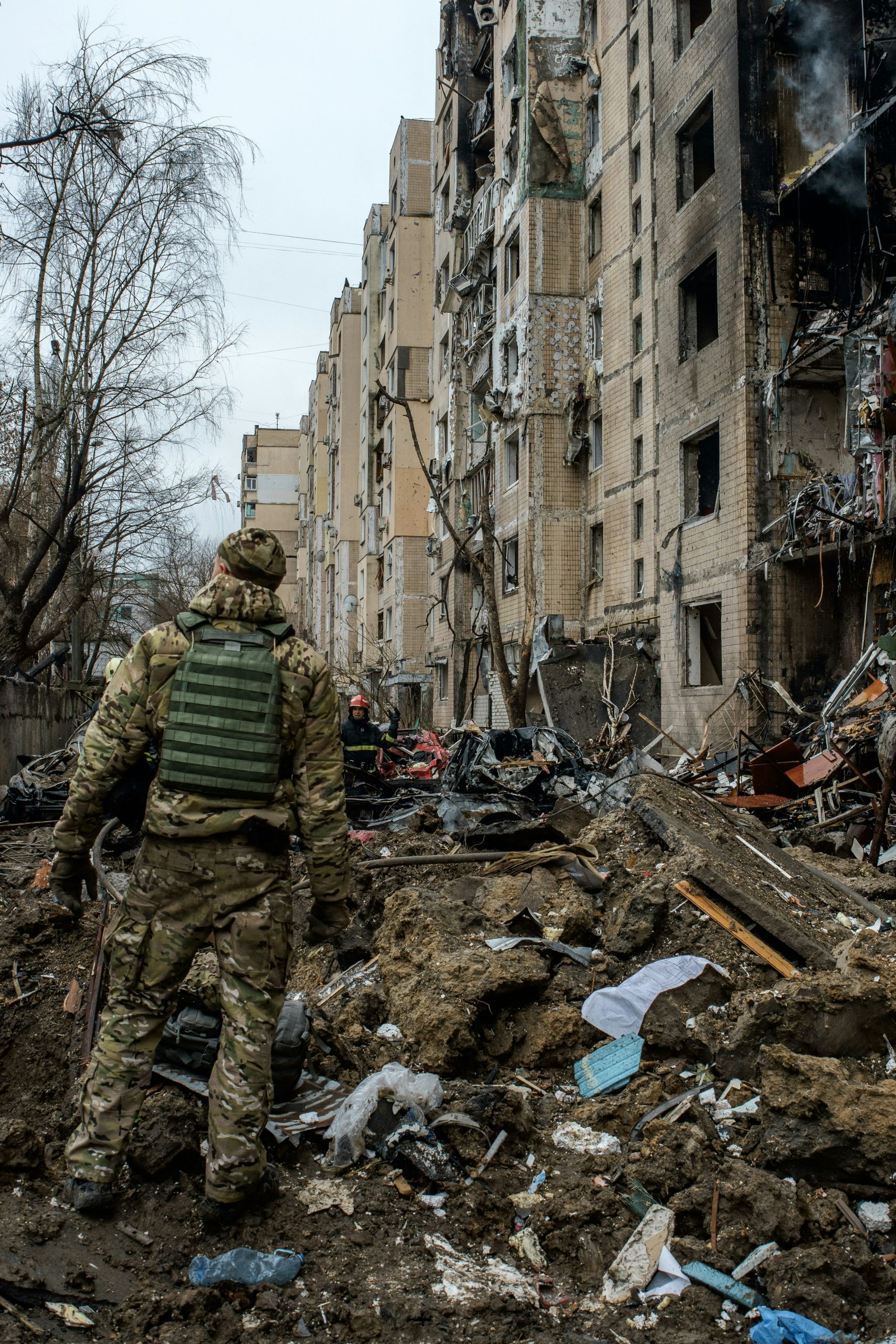
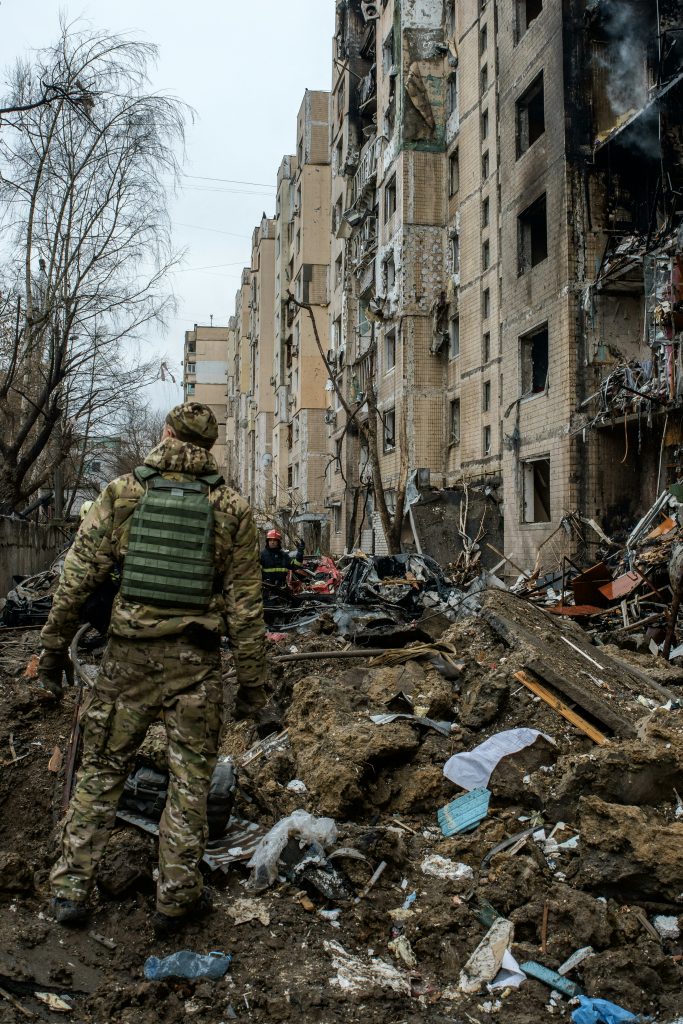
Ukraine: Day 1,484. The War That Has No End in Sight.
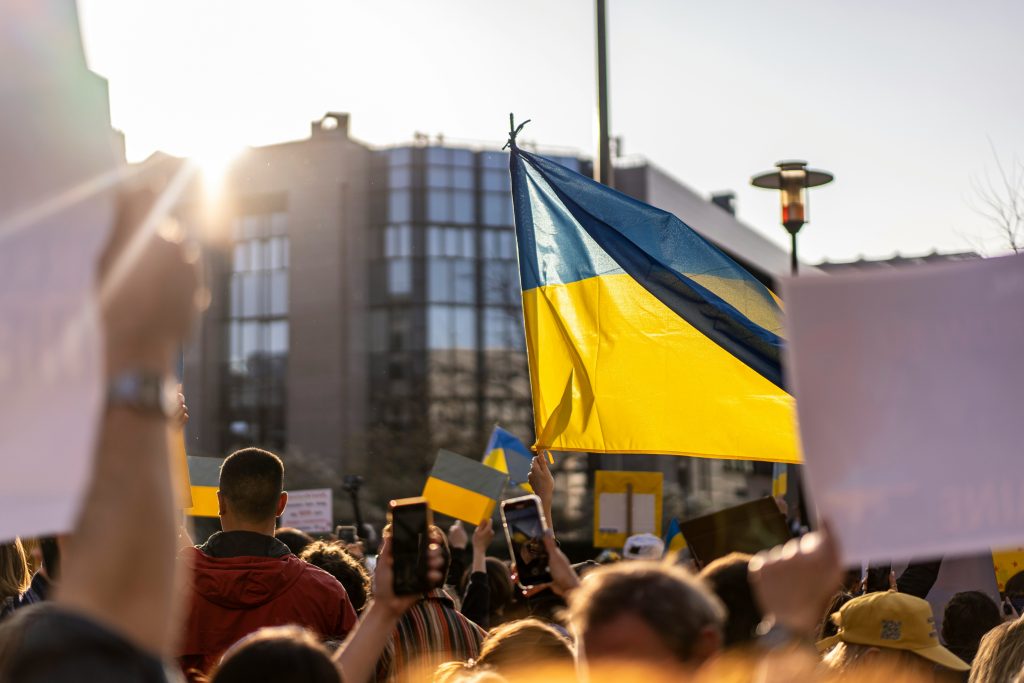
[ Photo by Anastasiia Krutota on Unsplash]
It started before dawn on February 24, 2022. Russian missiles struck cities across Ukraine while most of Europe slept.
Today is day 1,484 of that war.
Last week alone, Russia fired over 1,770 drones at Ukraine in seven days — confirmed by Ukraine’s Air Force and reported by Euromaidan Press. Russia is now producing more than 400 Shahed-type attack drones per day. The goal is not just destruction. It is exhaustion.
According to Ukraine’s national energy provider DTEK, the country has lost roughly 70% of its electricity generation capacity. In parts of Ukraine, civilians receive just three to four hours of power daily. (Russia Matters War Report Card, March 2026)
Western officials estimate Russian military casualties at over one million killed and wounded since the invasion began. Ukrainian casualties are estimated at between 250,000 and 300,000. These figures are contested. The scale they describe is not.
“There is not a single power plant in Ukraine that Russia has not attacked.”
— Ukraine’s Energy Minister, January 2026
Ukraine and Russia together supply roughly a quarter of the world’s wheat. When the war began, food prices rose across Africa, the Middle East, and South Asia. Families who had never heard of Kharkiv felt the war in their grocery bills. (UN FAO, 2024)
Peace talks remain stalled. The world has moved on.
The Ukrainians are still waiting for permission to do the same.
Sudan: The World’s Worst Crisis. Do You Even Know It’s Happening?
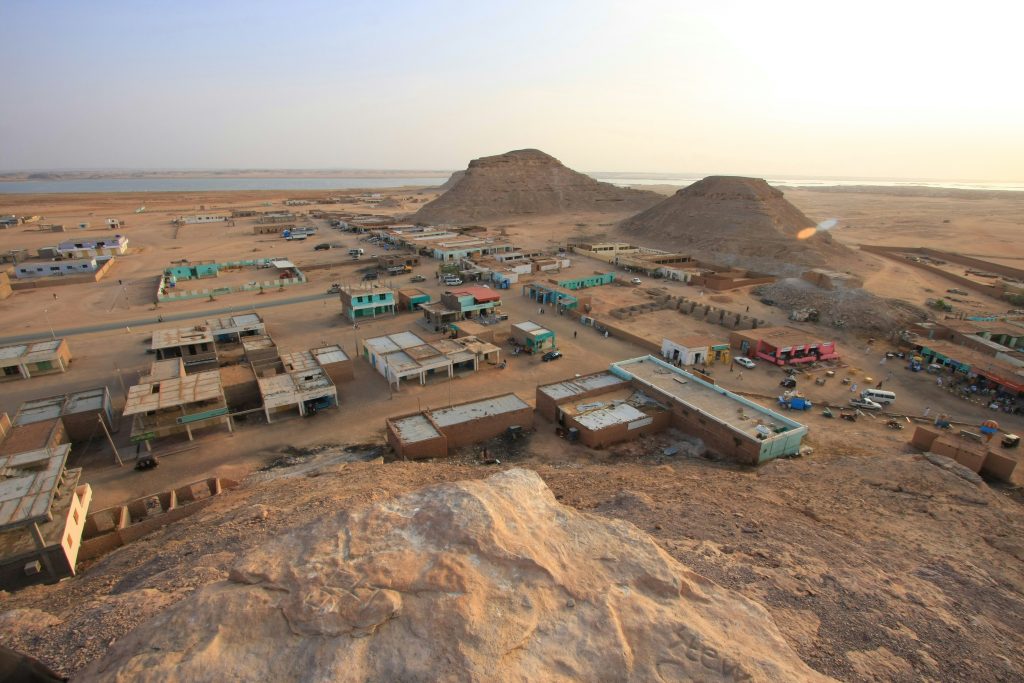
[Photo by Steve King on Unsplash]
In April 2023, a war began in Sudan. Most of the world did not notice.
Nearly three years later, the death toll is genuinely unknown. Estimates range from 150,000 to as high as 400,000 — the true figure is impossible to verify while the war continues. What is not in doubt: the UN confirms over 10 million people have been forced from their homes — the largest displacement crisis in the world.
UNICEF’s situation reports from North Darfur document a child being treated for severe acute malnutrition roughly every six minutes. (UNICEF Sudan, 2025)
The World Health Organisation confirms that over 37% of Sudan’s health facilities are completely non-functional. (WHO, 2026)
As recently as February 24, the UN Security Council issued a statement of deep concern. Resolutions were discussed.
The killing continued.
“Sudan is not a distant tragedy. It is a live emergency.“
The Council on Foreign Relations assessed Sudan as the conflict most likely to worsen in 2026. (CFR, 2026)
Somewhere in Darfur tonight, a family is sleeping in the open. The UN knows. The Security Council knows.
Nobody is coming.
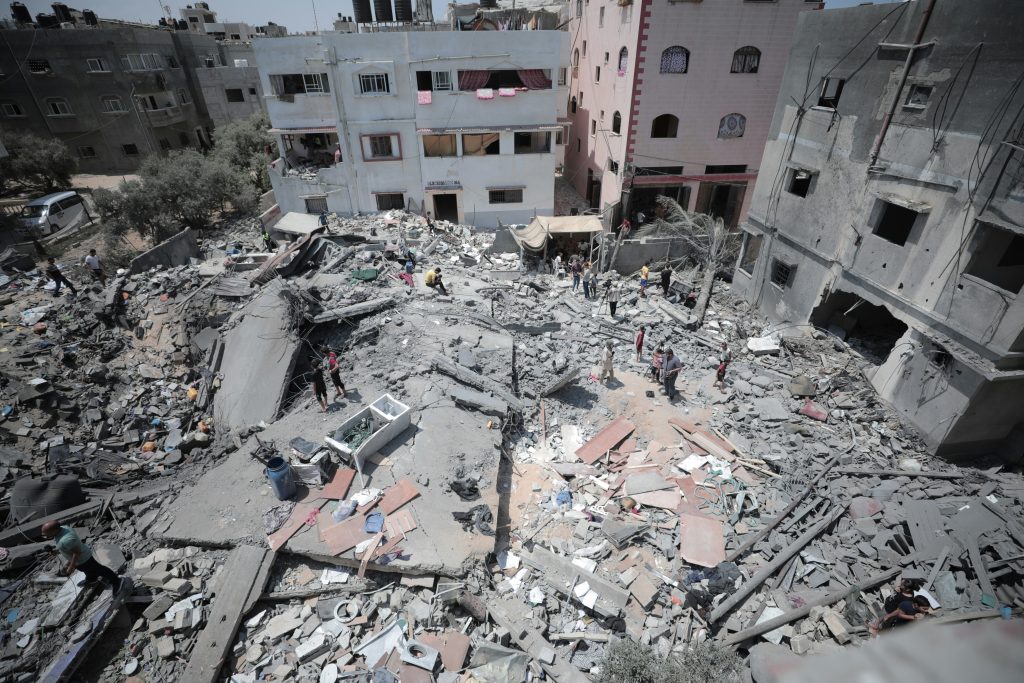
Gaza: A Territory That Has Been Unmade
[Photo by Mohammed Ibrahim on Unsplash]
A ceasefire came. But it came, as the International Crisis Group documented this month, only after much of Gaza had already been destroyed. (ICG, March 2026)
The governance structures required for recovery do not exist. Security arrangements are unresolved. What exists today is not peace.
It is an unstable pause.
The Gaza Ministry of Health reports that more than one in ten of Gaza’s 2.3 million people has been killed or injured. UNRWA has documented the displacement of most of the population — many of them multiple times over.
The World Bank estimates reconstruction will cost over $80 billion — in a territory whose entire pre-war economy was worth less than $3 billion annually. (World Bank Gaza Assessment)
Médecins Sans Frontières has described the psychological trauma among Gaza’s children as among the most severe the organisation has ever encountered in any conflict zone. (MSF, 2025)
“These children will carry this war inside them for the rest of their lives.”
They will shape the next chapter of this region’s history.
They will do so with wounds the world watched happen and chose not to stop.
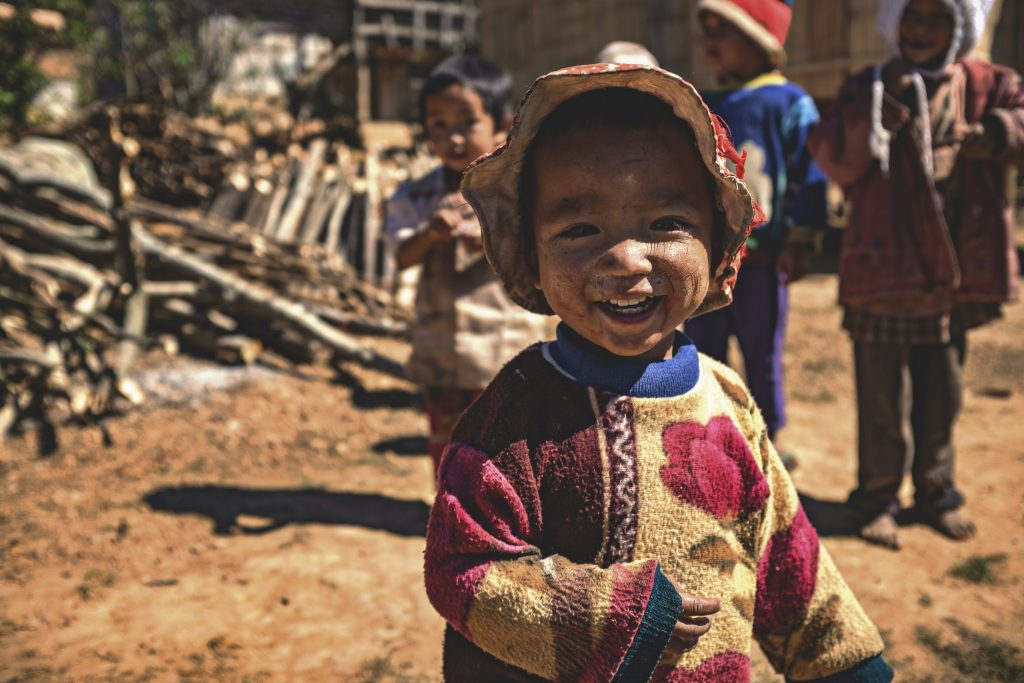
Myanmar: The War You Were Never Really Told About
[Photo by Jesse Schoff on Unsplash]
Here is a test.
Without looking it up — can you name the leader of Myanmar’s military junta?
Most people cannot. And that, in a single sentence, is the story of Myanmar.
The UN Human Rights Office and the Assistance Association for Political Prisoners estimate that over 80,000 people have been killed since the February 2021 coup. More than three million are internally displaced. Another one million have fled abroad. These figures should be read as minimums — conflict deaths in Myanmar are notoriously difficult to document. (AAPP; UN Human Rights Office, 2026)
This month, the International Crisis Group assessed that the junta has regained the upper hand — backed by China. (ICG Myanmar, March 2026)
A sham election is being prepared. The generals will stay in power. The killing will continue.
“Myanmar receives a fraction of the international attention given to other conflicts.“
There is no satisfactory explanation for that disparity.
Only the uncomfortable truth that some wars are considered more worth covering than others.
The Sahel: The Crisis Nobody Is Talking About

[Photo by NIR HIMI on Unsplash]
Mali. Burkina Faso. Niger.
Three countries. Four coups in three years.
Since September 2025, jihadist groups linked to al-Qaeda have maintained a partial blockade on Mali’s capital, Bamako — not a sudden siege, but a slow strangling. Supply lines cut. Rural areas seized. The capital squeezed from the outside in. (ICG, March 2026)
The Armed Conflict Location and Event Data Project records tens of thousands of conflict events across the Sahel over the past three years, with civilian fatalities rising consistently year on year. (ACLED, 2026)
Russia’s Africa Corps — the successor to the Wagner Group, documented by multiple UN Panels of Experts — is now operating in Mali and Burkina Faso, trading security guarantees for mining rights.
“This is not simply a regional crisis. It is a proxy competition for a continent’s future — fought on the bodies of its poorest people.”
The military governments that promised to end the violence have made it worse.
The people who voted for stability got war instead. And the world called it an internal matter.
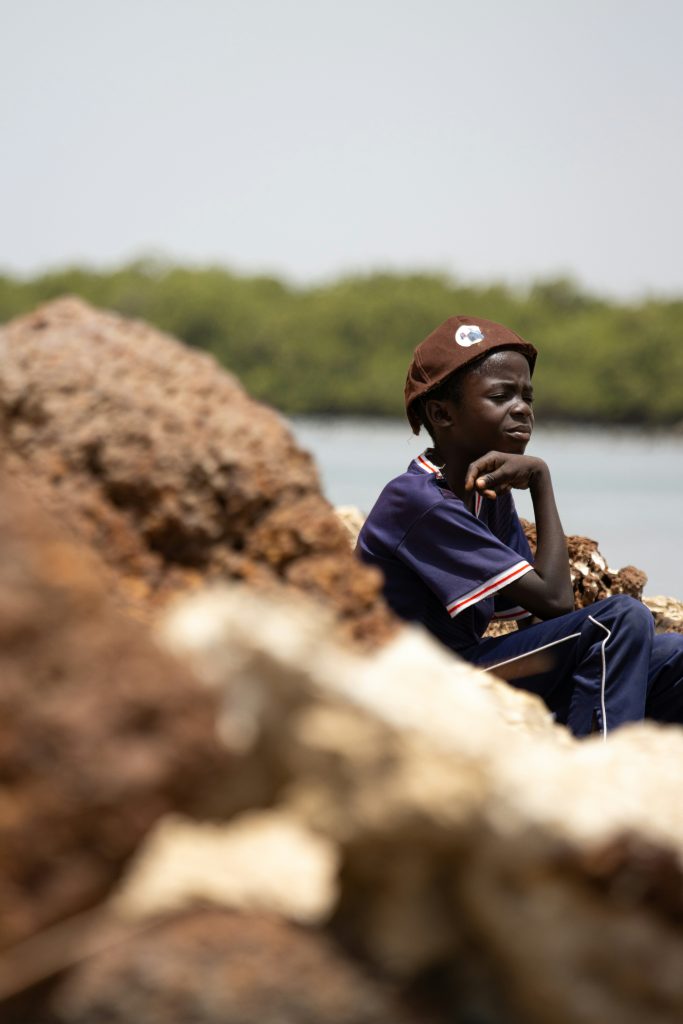
DR Congo: The War That Lives Inside Your Phone
[Photo by Nathanaël Desmeules on Unsplash]
The eastern Democratic Republic of Congo has been at war, in various forms, for nearly thirty years.
It has gotten worse.
Rwanda-backed M23 rebels have seized Goma and Bukavu — the two largest cities in eastern Congo. The DRC has filed a case against Rwanda at the International Court of Justice. (ICJ, 2026)
The Internal Displacement Monitoring Centre records over five million people displaced. (IDMC, 2026)
“The minerals beneath this war are in your pocket right now.”
Coltan, cobalt, gold, tin — the raw materials of every smartphone and electric vehicle battery. Armed groups fund themselves by controlling the mines that produce them.
Global Witness and Amnesty International have traced these minerals from conflict zones directly into the supply chains of major technology companies. Their findings have not been credibly disputed. (Global Witness; Amnesty International, 2024-2025)
“The war in Congo is not separate from modern life. It is embedded in it.”
Every time a new phone is manufactured, somewhere in eastern Congo, someone pays for it in ways that never appear on the receipt.
We are all, without knowing it, funding this war.
Why Are There So Many Wars Right Now?
This month, the International Committee of the Red Cross published research covering 23 active conflict situations.
Their conclusion: international humanitarian law — the rules designed to protect civilians during wartime — is at breaking point. (ICRC, March 2026)
The Stockholm International Peace Research Institute reports that global military spending exceeded $2.4 trillion in 2025 — a record high, rising in every region simultaneously. (SIPRI, 2026)
The UN Secretary-General’s most recent report documented the highest civilian casualties since systematic tracking began. (UN, 2025)
None of this is inevitable. None of this is acceptable.
The wars are not hidden.
We are just not looking.
Sources & Further Reading
All figures in this article are drawn from primary sources and independent research organisations. Where estimates are contested, we have said so.
Kyiv Independent — kyivindependent.com
Euromaidan Press — euromaidanpress.com
Russia Matters — russiamatters.org
UN FAO — fao.org
OCHA Sudan — unocha.org
UNICEF Sudan — unicef.org
WHO Sudan — who.int
CFR Preventive Priorities Survey 2026 — cfr.org
International Crisis Group — crisisgroup.org
World Bank Gaza — worldbank.org
UNRWA — unrwa.org
Médecins Sans Frontières — msf.org
UN Human Rights Office — ohchr.org
AAPP — aappb.org
ACLED — acleddata.com
IDMC — internal-displacement.org
ICJ — icj-cij.org
Global Witness — globalwitness.org
Amnesty International — amnesty.org
ICRC — icrc.org
SIPRI — sipri.org
UN Panel of Experts — un.org
Cons of War is an independent publication documenting the human cost of armed conflict worldwide. Write to us at editor@consofwar.com